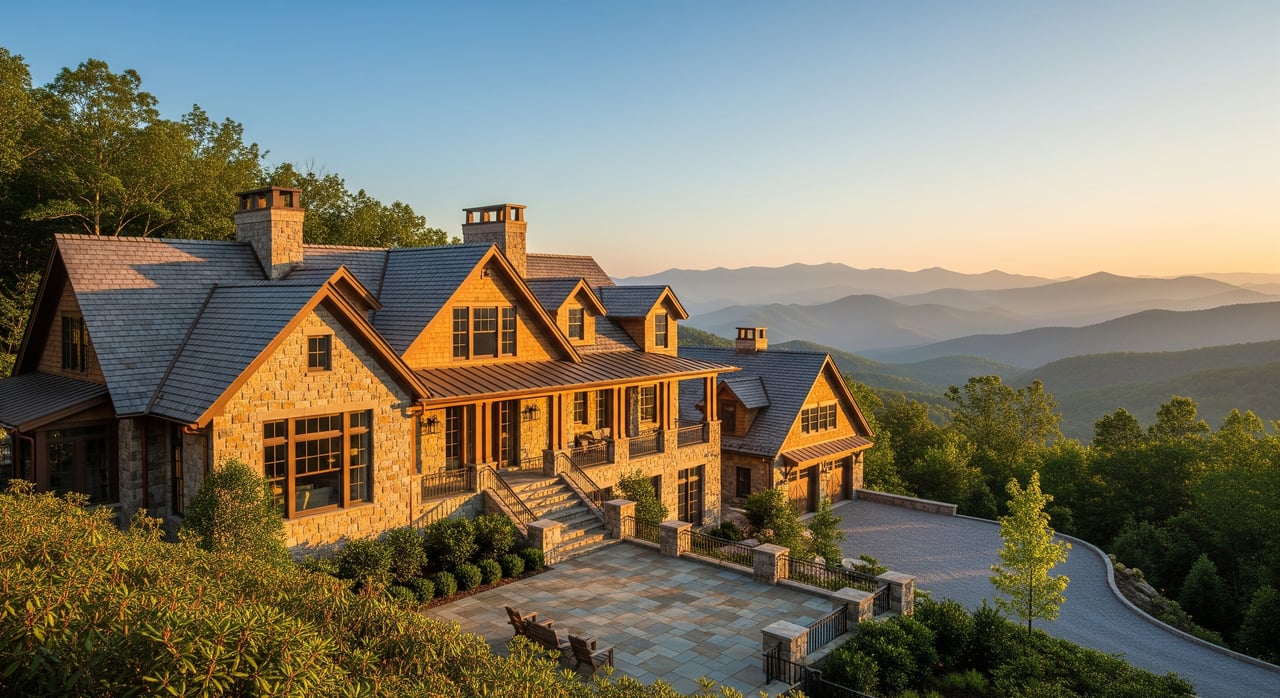
What is your Highlands home really worth right now? In a mountain resort market where a few hundred yards, a ridge view, or a private road can swing prices, guessing is costly. You want a clear, data-backed number you can trust. In this guide, you’ll see exactly how we evaluate value in Highlands, why views and micro-location matter so much, and what to expect from a pricing conversation. Let’s dive in.
What drives value in Highlands
Comparable sales are the anchor
Comparable sales are the strongest signal of value. In Highlands, closed sales can be sparse and varied across cottages, luxury mountain homes, condos, and lots. That mix makes simple price-per-square-foot comparisons noisy. We solve this by selecting the most relevant comps and adjusting them carefully for differences that matter.
Micro-location and access shift prices
Small topographic changes can have large effects. Proximity to downtown Highlands often carries a premium for convenience and walkability. Access also matters: a paved county road typically supports stronger pricing than a steep private drive with seasonal maintenance. Elevation, sun exposure, and usable acreage also feed into value.
View premiums add measurable value
Long-range mountain views, valley panoramas, and dramatic ridgelines are prized. The premium depends on quality, permanence, and seasonality. We quantify the effect using paired sales or regression-style analysis when data allows. We also consider how view permanence could change with tree growth or future nearby construction.
Seasonality and buyer mix matter
Highlands sees a higher share of second-home buyers, retirees, and luxury purchasers. Many prioritize views, privacy, and proximity to town. Spring, summer, and fall bring greater visitor traffic and more showing activity, while winter can attract motivated lifestyle buyers. Cash offers are more common in resort markets, which can change appraisal and negotiation dynamics.
Our step-by-step valuation process
1) Preliminary market scan
We start by pulling 6 to 12 recent closed sales and a curated set of active and pending listings in Highlands and nearby plateau micro-markets. We gather square footage, bedrooms and baths, lot size, usable acreage, elevation, and view descriptions. We also note days on market, list-to-sale price ratios, and sale dates to support time adjustments.
2) On-site walkthrough
A site visit confirms details that photos and records miss. We verify view quality, access type, drive slope, utilities, and finishes. We look for items that move the needle, like kitchen and bath updates, roof age, HVAC, garage or carport capacity, and outbuildings. We also look for easements, HOA rules, and any septic considerations.
3) Adjusted comparable analysis
We choose 3 to 6 closed comps that bracket your property’s features and location. Starting with each comp’s sale price, we apply dollar or percentage adjustments for differences in finished area, bed and bath count, condition, lot usability, garage, and location. We then apply specific adjustments for view premiums and time on market since the comp sale date. Finally, we weight the comps by similarity and recency to produce an indicated value range.
4) View premium quantification
When a view is a factor, we model it explicitly. We use paired sales where two similar homes differ mainly by view to estimate a premium. When enough data exists, we test a regression-style approach with view treated as a graded variable. We also consider permanence: tree growth, seasonal foliage, fog patterns, and nearby development potential all influence risk and value.
5) Optional income approach for rentals
If your Highlands property has a reliable short-term rental record or you are marketing to income-focused buyers, we build a separate income-based value. We look at documented occupancy, seasonal nightly rates, and operating costs to estimate a stabilized net operating income. We then apply a market cap rate to triangulate an indicated value and reconcile it with the comparable sales approach.
6) Value range and strategy conversation
We present an indicated value range, not a single number. Highlands is a lower-volume, heterogeneous market, so ranges are more honest and useful. We explain the primary drivers of that range, such as view quality, lot usability, and access, and we show how sensitive the outcome is to specific comps or assumptions. From there, we align on a pricing strategy that fits your goals and timing.
How we adjust comparable sales
We adjust comps using a stepwise approach so the logic is transparent. Key adjustment areas include:
- Finished square footage and floor plan livability
- Bedrooms and bathrooms
- Condition and recent updates to kitchens, baths, roof, HVAC
- Lot size, usable acreage, slope, and outdoor living spaces
- Garage, carport, and storage or outbuildings
- Road type, winter access, and maintenance responsibilities
- Proximity to downtown Highlands and core amenities
- Utilities such as municipal water/sewer versus well/septic
- View quality, from partial or seasonal to panoramic long-range
- Sale date time adjustment to reflect current market movement
Each comp receives dollar or percentage credits or debits for these differences. We then reconcile them into a weighted average, giving more weight to the most similar and most recent sales.
How we measure view premiums
View quality is a major value driver in Highlands. To isolate it, we rely on two practical methods:
- Paired sales. We compare two highly similar sales where one has a superior view and one does not. The difference in sale price, after other adjustments, indicates the view premium.
- Regression-style analysis. When data supports it, we use a simple model with view coded as none, partial, or panoramic to estimate its contribution while holding other features constant.
We also grade the permanence of the view. Unobstructed ridgeline or valley views with low risk of blockage tend to command higher, more durable premiums than seasonal or uncertain views.
When rental income matters
If you operate your Highlands home as a short-term rental, or if the buyer pool includes investors, we may add an income approach alongside comps. The core steps are:
- Estimate stabilized gross income using documented occupancy and seasonal rates.
- Deduct vacancy, operating expenses, and management fees to produce a stabilized net operating income.
- Divide NOI by a market cap rate to produce an income-based indicated value.
This is not a replacement for comps in a primarily owner-occupied market. It is a supplement that recognizes documented income potential when buyers value it.
What we need from you
To deliver the most accurate valuation, please gather the following if available:
- Deed and current tax bill
- Latest survey or plat and any floor plans
- Square-footage confirmation, if you have it
- Recent utility bills for seasonality context
- Receipts for major upgrades such as kitchen, roof, or HVAC
- Septic permit and recent inspection logs, if applicable
- Short-term rental records, including gross rents and occupancy
- HOA covenants and fee schedules, if applicable
These items help us verify facts, reduce uncertainty, and make more precise adjustments.
Pricing strategy aligned to your goals
Once we agree on an indicated value range, we set a strategy to meet your priorities:
- Price to create competition. Aim at the lower end of the range to widen the buyer pool and increase the chance of multiple offers.
- Price to net a target. Position within the middle of the range with strong marketing to support the ask.
- Price for a negotiated sale. Start near the top of the range when uniqueness or recent upgrades justify it, understanding time on market could be longer.
We match the strategy to your timeline, your tolerance for showings, and your desired net proceeds.
Handling uncertainty in a small market
Highlands has lower transaction volume than metro areas. That means some comps are imperfect, and a handful of high-end sales can skew short-term metrics. We address that by showing sensitivity to specific comps and presenting a realistic range. We also talk through appraisal dynamics for financed buyers and the role of cash offers in keeping deals on track when appraisals lag the market.
Seasonality and timing
Listing in spring, summer, or fall typically brings more visitors and better exposure. That can translate to more showings and a broader buyer pool. Winter can still be productive, especially for motivated buyers drawn to the mountain lifestyle, but lead volume may be lower. We adjust expectations for days on market and tailor the marketing plan to the season.
What this means for your Highlands home
The right price is the one backed by local data, a careful comp set, and clear reasoning about view, access, and micro-location. It is also the price that supports your selling goals and timeline. By combining a transparent comparable analysis with a view premium study and, where relevant, an income cross-check, you get a value range you can trust and a plan that makes sense.
Ready to see where your home lands in today’s Highlands market? Start with a conversation and a tailored analysis. Reach out to schedule your consultation with Collin Taylor - Main Site.
FAQs
How many comparable sales are used in Highlands valuations?
- We typically analyze 3 to 6 closed sales, plus active and pending listings for context, adding more when data supports it and fewer when only distant or dissimilar sales exist.
How much is a mountain view worth in Highlands?
- It varies widely; we use paired sales or a simple model to isolate the premium, which depends on view quality, permanence, and buyer demand at the time of sale.
Does listing season affect my Highlands sale price?
- Yes; peak visitor months in spring, summer, and fall usually increase exposure and competition, while winter can bring motivated buyers but often a smaller audience.
Why might an appraisal come in lower than my agreed price?
- With fewer and more varied comps, appraisals can be conservative; cash buyers avoid appraisal risk, while financed buyers depend on recent closed sales in the appraiser’s report.
How do short-term rental earnings influence value?
- Documented, stable income can support an income-based indicated value that we reconcile with comparable sales when buyers value rental potential.